AI coaching and automation tools for enhancing business efficiency and productivity.

AI Is Creating a New Developer Role (Here’s What It Means for Tech)

By Mike Payne | AI Consultant & Developer Strategist
Helping businesses build practical AI systems that create real results.

AI is creating a new developer role, and most people haven’t caught up yet.

The tech world is loud right now.

Layoffs. AI panic. “Developers are getting replaced.”

Some of it is true. Most of it is misunderstood.

AI is creating a new developer role, and most companies are still hiring for the old one. While headlines focus on replacement, the real shift is happening in how developers create value. Coding still matters, but judgment, systems thinking, and AI oversight matter more than ever.

What This Means For You

AI Is Not Plug-and-Play

Most businesses use AI without structure, leading to wasted time and inconsistent results.

Developers Need to Adapt

Those who learn AI systems and workflows will move ahead quickly.

Strategy Beats Tools

Tools are everywhere. Knowing how to use them properly creates value.

What’s Actually Happening Right Now in Tech

Companies are moving fast. Too fast in some cases.

  • Businesses are cutting roles expecting AI to replace output
  • Teams are adopting AI tools without clear workflows
  • Developers are being told to “use AI” without direction

The result?
Confusion. Poor execution. Frustration.

AI isn’t failing.
The way it’s being used is.


Why AI Is Creating a New Developer Role

AI is not removing the need for developers. It’s changing what makes a developer valuable. Developers who want to stay ahead should focus on systems thinking, AI workflows, and practical implementation.

The traditional role focused heavily on writing code. The new reality requires something more.

AI is creating a new developer role built around:

  • Systems thinking instead of isolated tasks
  • Workflow design instead of single outputs
  • Integration instead of manual repetition
  • Oversight instead of blind execution

Many experts see developers shifting into broader roles focused on architecture, validation, and business outcomes. This breakdown on how AI is transforming software developers explains the trend well. This shift is why some developers feel threatened while others are accelerating.

Same industry. Different response.


What This New Developer Role Actually Looks Like

This isn’t a theory. This role already exists.

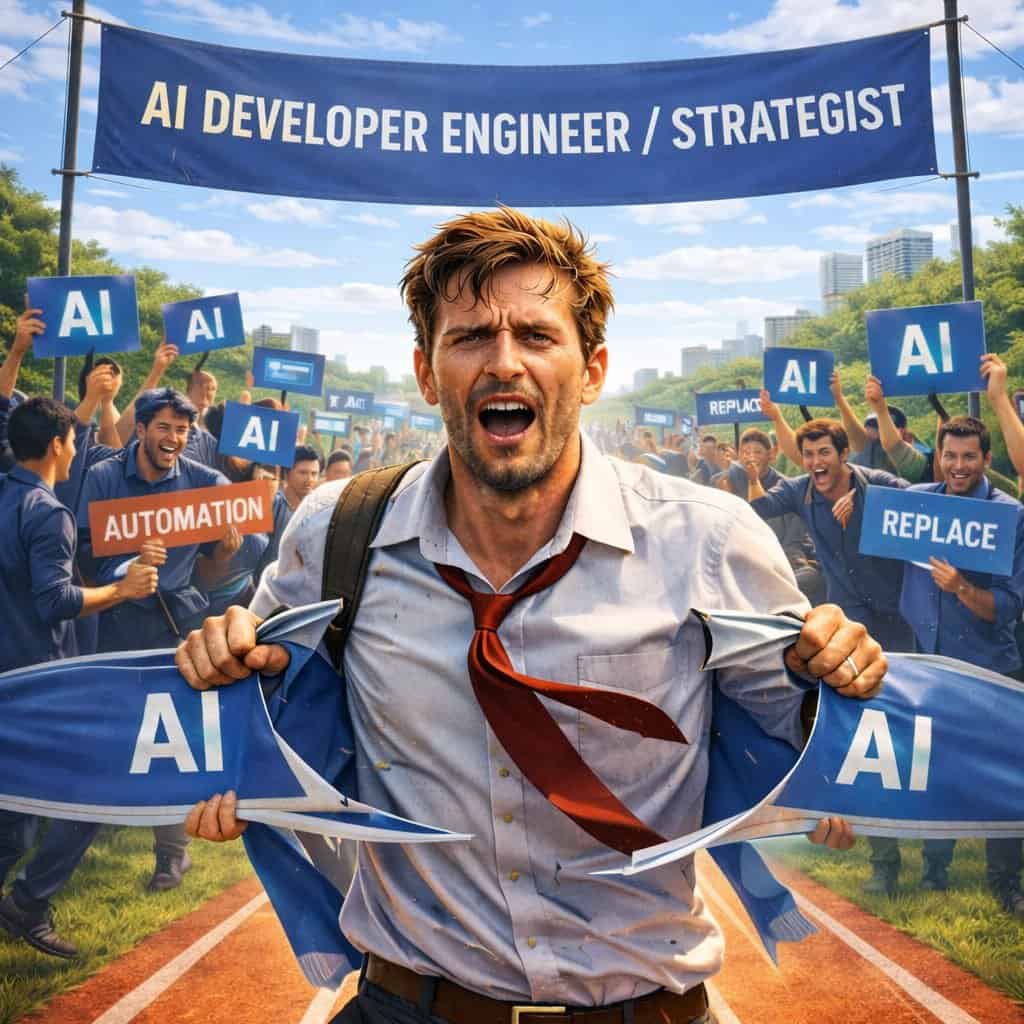
AI Developer Engineer / Strategist

Not just coding. Not just prompting. This role sits between business needs and AI execution.
Today’s strongest developers are becoming:
  • AI workflow architects
  • Code reviewers and validators
  • Systems integrators
  • Automation builders
  • Technical strategists tied to business goals
  • Problem solvers who turn ideas into outcomes
This is the developer who doesn’t just “use AI.” This is the developer who makes AI work.

Why Businesses Need This New AI Developer Role

Most businesses don’t fail with AI because the tools are bad. They fail because there is no strategy behind the implementation.

Common issues:

  • AI outputs that need constant fixing
  • Broken internal workflows
  • Teams unsure how to use the tools
  • Time wasted experimenting without results

AI amplifies systems.

If the system is weak, results get worse faster.
If the system is strong, results scale.

Businesses that move first will need developers who can design and deploy scalable AI systems across their operations.

That’s why this new developer role matters.


How Developers Can Adapt to This New Role

This is where the shift happens.

Developers who succeed won’t just learn tools. They will learn how to think differently. Developers using AI tools are already seeing gains in speed and efficiency. GitHub research on GitHub Copilot found developers completed tasks faster and reported smoother workflows.

Developers who adapt early can gain an edge quickly. Learn prompting, validation, workflow automation, communication, architecture, and business thinking. The market is shifting toward builders who can direct systems, not just write lines.

To adapt to this new developer role, focus on:

  • Understanding where AI actually fits in a workflow
  • Building structured prompt systems
  • Connecting tools through integrations and automation
  • Thinking in outcomes, not just tasks

This isn’t about replacing your skillset.
It’s about expanding it.


How This Actually Works in the Real World

This isn’t speculation.

I’m already doing this.

Over the last year:

  • AI has not reduced my role
  • It has expanded it
  • It has created new opportunities with clients
  • It has positioned me as the person who helps them figure this out

What that looks like in practice:

1. Identify the Opportunity
Find where AI can save time or improve output.

2. Build the System
Create workflows, prompts, and integrations that actually function.

3. Deploy and Refine
Test, adjust, and make it usable for real teams.

This is what the new developer role looks like in practice.

How I Help Businesses Use AI the Right Way

Identify the Opportunity →
I look at your current workflows and pinpoint where AI will actually save time, improve output, or remove bottlenecks. No guesswork. No wasted effort.
Discover workflow bottlenecks
Build Structured AI Systems →
This is where most fail. I create workflows, prompt systems, and integrations that produce consistent, usable results inside your real operations.
AI automation assessment
Deploy, Refine, and Train →
AI isn’t “set it and forget it.” I refine outputs, guide implementation, and ensure your team can actually use what’s built.

The Reality Most People Are Missing

AI is not replacing developers.

It’s replacing developers who don’t adapt.

That’s the uncomfortable part nobody wants to say out loud.


Want to See How This Applies to You?

Whether you're a business trying to implement AI or a developer trying to stay ahead, the next step is understanding where AI actually fits.
Where Do You Fit In?

AI is changing how businesses operate and how developers build. The question is how you’re going to use it.

Are You a Developer Looking to Stay Ahead?

Learn how to adapt your skillset, build smarter systems, and stay valuable in a market that changes by the quarter. Discover how developers can use AI to increase output, sharpen strategy, and move into the next evolution of development with confidence instead of getting blindsided by it.
Man breaking through a banner with AI-related signs at a tech rally.
AI coaching and automation tools for enhancing business efficiency and growth.
© 2026 | Think Above, LLC - All Rights Reserved
You can't view the "Developers – Adapting to the new AI Market" (#1860) item because it is in the Trash. Please restore it and try again.